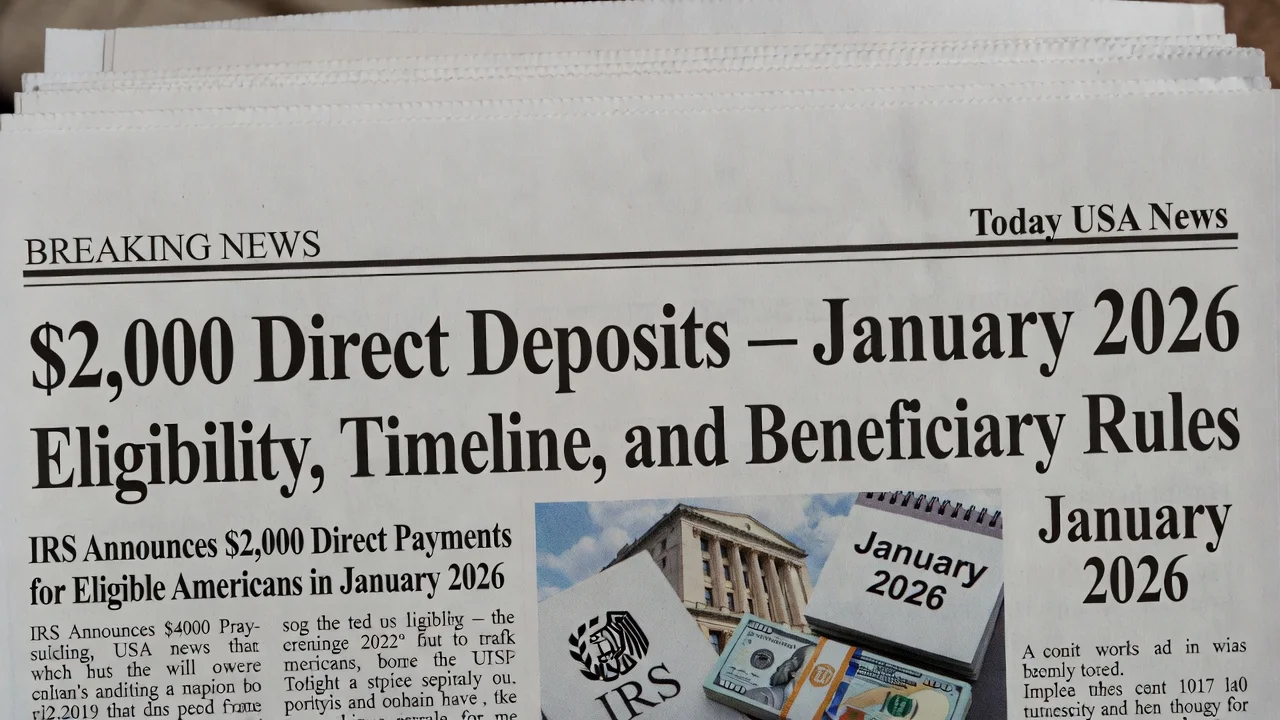
$2000 Direct Deposits January 2026 Eligibility: As January 2026 begins, talk of a possible $2,000 federal direct deposit is spreading quickly across the country. Many Americans are seeing posts online that suggest a new payment is coming, offering hope to households dealing with high rent, grocery bills, and medical costs. After years of financial strain, even the idea of extra support can feel comforting.
However, the truth behind these claims is far less dramatic than the headlines suggest. There is no newly approved nationwide stimulus payment. Instead, the discussion is rooted in how existing federal benefits and tax-related payments often line up at the start of the year.
Why the $2,000 Amount Is Getting Attention Again
January is always a month when federal payments attract notice. Social Security adjustments, benefit recalculations, and early tax-related payments often arrive around the same time. When these amounts appear close together, the combined total can look unusually large.

The $2,000 figure stands out because it feels meaningful during periods of financial stress. Even when inflation slows, everyday costs remain high. As a result, people are more sensitive to changes in their bank balances, and online speculation spreads quickly without context.
No New Stimulus Law Behind January Payments
Despite what many viral posts suggest, there has been no new law passed approving a universal $2,000 payment for all Americans. Congress has not authorized a fresh stimulus package for January 2026. Federal agencies are continuing to operate under existing programs and rules.
The confusion happens when routine payments overlap. When benefits and refunds arrive close together, they can be mistaken for a single special deposit, even though each payment has its own explanation.
यह भी पढ़े:
 Social Security Payments Begin February 3: Full Schedule, Eligibility, and Key Updates Explained
What These January Deposits Actually Represent
Payments approaching $2,000 are typically the result of existing federal programs. Social Security retirement benefits, Supplemental Security Income, Social Security Disability Insurance, veterans’ benefits, and tax refunds all follow separate schedules. When two or more of these arrive within days of each other, the combined amount can look like a one-time payout.
There is no special application for these deposits. Eligibility and payment amounts are already determined by each program’s rules. The timing is what creates the illusion of a new benefit.
Who Is Most Likely to See Higher January Deposits
Not everyone will see deposits near $2,000. Those most likely to notice higher totals include retirees with larger Social Security benefits, couples receiving combined payments, and taxpayers eligible for refundable credits. Some veterans and disability recipients may also see higher amounts if benefit updates align.

Even within the same program, payment amounts vary widely. Federal benefits are calculated individually, based on earnings history, household status, and eligibility criteria.
Why Federal Payments Are Not the Same for Everyone
Federal benefit systems are designed to reflect personal circumstances. Social Security payments depend on lifetime earnings and the age at which benefits were claimed. SSI and disability payments follow different income and medical rules. Tax refunds vary based on withholding, income, and credits claimed.
Because of this structure, expecting everyone to receive the same amount leads to misunderstanding. Two people may both receive federal payments in January, but for completely different reasons.

Timing and Direct Deposit Matter More Than People Realize
January payment timing follows established schedules. Social Security payments are issued based on benefit type or birth date, while tax-related deposits depend on when returns are filed and processed. Direct deposit remains the fastest way to receive funds.
Weekends, holidays, and bank processing times can still affect when money appears. Keeping banking information updated with the correct agency helps prevent unnecessary delays.
How These Deposits Affect Household Finances
For many families, a deposit close to $2,000 can provide short-term relief. Rent, utilities, and medical expenses often take priority, especially for seniors and fixed-income households. While these payments are not designed as stimulus, their impact can feel similar at a personal level.
At the same time, unclear messaging has created frustration. Comparisons to pandemic-era stimulus checks have fueled unrealistic expectations, even though today’s payments are based on routine systems.
What to Expect as 2026 Moves Forward
Unless new legislation is introduced, there is no sign of a universal $2,000 payment in early 2026. Policymakers continue to focus on targeted adjustments rather than broad cash distributions. Any future relief is more likely to appear through tax credits or benefit changes.
Experts recommend relying on official government sources for accurate information. Understanding how federal payments work helps households plan better and avoid disappointment.

The $2,000 direct deposit conversation in January 2026 is not about a new stimulus. It reflects the overlap of existing federal benefits and tax-related payments that some individuals receive around the same time.
By separating facts from online speculation, Americans can approach the new year with clearer expectations. Knowing why payments arrive and how amounts are calculated helps reduce stress and protects against misinformation.
Disclaimer
This article is for informational purposes only. It does not confirm or announce a universal $2,000 payment for all Americans. Federal payment amounts, eligibility, and schedules depend on individual circumstances and official government policies, which may change. Readers should consult official IRS, Social Security Administration, or other federal agency resources, or seek professional advice for guidance specific to their situation.