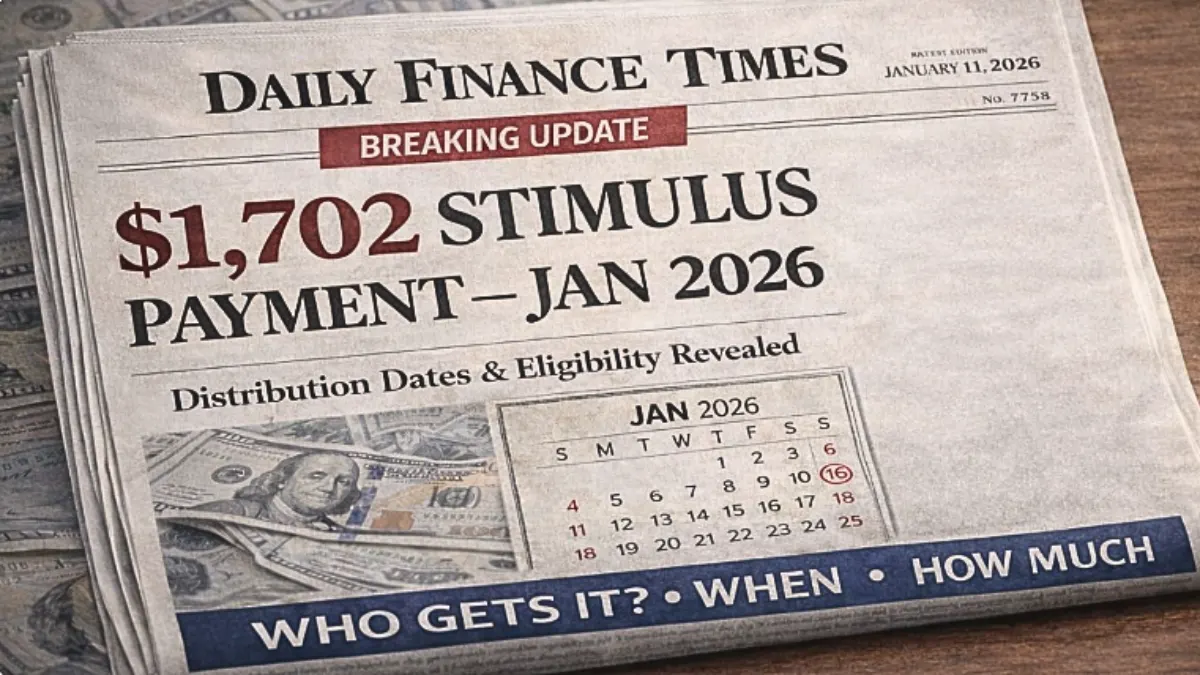
$1702 Stimulus Payment Approval Posts Blowing Up: If you have been scrolling through social media lately, chances are you have seen posts claiming that a $1,702 stimulus payment has been approved. These posts often use bold text, urgent language, and images that look official at first glance. For many people already under financial pressure, the idea of unexpected help sparks real hope.
That hope is understandable. After years of economic uncertainty, even the possibility of relief feels comforting. But before sharing or clicking anything, it is important to slow down and look at the facts behind these viral claims.
Where the $1,702 Claim Comes From
The $1,702 figure did not appear out of thin air, which is part of why the rumor feels believable. Similar numbers have shown up in discussions about tax credits, benefit estimates, or proposed legislation that never became law. Over time, these numbers get pulled out of context and reshaped into something they are not.
Social media posts often mix real financial terms with false conclusions. When people see a specific dollar amount instead of a round number, it sounds official, even when it is not tied to any approved program.
Is There a New Federal $1,702 Stimulus Payment?
The short and clear answer is no. There has been no federal law passed approving a nationwide $1,702 stimulus payment. Congress has not authorized such a program, and no announcement has been made by the IRS or the U.S. Treasury.
Any real federal payment would require legislation, a presidential signature, and formal public guidance. None of those steps have happened for a $1,702 stimulus, despite what viral posts suggest.
यह भी पढ़े:
 Social Security Payments Begin February 3: Full Schedule, Eligibility, and Key Updates Explained
Why These Posts Feel So Convincing
These claims spread quickly because they are designed to trigger emotion. They tap into memories of past stimulus checks that were real and widely distributed. They also create urgency by telling people to act fast or share the post before it is “too late.”
When comments under these posts include people saying they received the money, it adds social pressure. Unfortunately, many of those comments are fake or copied from other scam posts.
Federal Payments vs State-Level Relief
One major source of confusion is the difference between federal and state payments. Some states do offer tax rebates, inflation relief checks, or special credits to residents. These programs vary widely in amount and eligibility.

A state payment does not apply nationwide. A claim saying that every American is receiving the same amount is a strong sign that the information is false.
The Real Risk Behind the Viral Claims
The biggest danger is not just disappointment. Many of these posts link to fake websites that ask for personal information. These sites may request Social Security numbers, bank details, or login credentials.
Once that information is shared, it can be used for identity theft or financial fraud. The excitement around stimulus rumors makes people more vulnerable to these scams.

How the Government Actually Announces Payments
Real government payments are never announced through memes or random screenshots. They are communicated through official government websites, press releases, and major news outlets.
The IRS and Treasury do not require people to click links in messages or share posts to qualify. Any request to do so should be treated as suspicious.
What You Should Trust Instead
If a payment is real, it will be listed on official .gov websites. These sources provide clear explanations, eligibility rules, and timelines. Anything that cannot be verified through an official government source should be questioned.
It is always better to check directly than to rely on social media summaries, which are often incomplete or misleading.
Why Misinformation Spreads So Easily
Financial stress makes people hopeful for good news. Scammers and click-bait creators understand this and use it to their advantage. Each share increases visibility, even when the information is wrong.
Unfortunately, good intentions can still spread false information. Sharing without checking can unintentionally hurt others.

How to Protect Yourself and Others
Taking a moment to pause before sharing can make a big difference. Verifying information protects not only you, but also friends and family who may trust what you post.
Reporting false or misleading posts helps limit their reach. Over time, this reduces the impact of scams across online communities.
The Truth Moving Forward
The viral $1,702 stimulus claim is not real. It is not an approved federal payment and should not be treated as guaranteed money. While real assistance programs do exist, they are announced clearly and officially.
Staying informed through trusted sources allows people to focus on real opportunities instead of false promises.
Final Thoughts
Hope is powerful, especially during difficult times. But hope needs to be grounded in facts. False stimulus claims do more harm than good by creating confusion and opening the door to scams.
By staying cautious, checking official sources, and sharing accurate information, we can protect ourselves and each other from unnecessary stress.

Disclaimer
This article is for informational purposes only and does not provide financial, legal, or tax advice. No federal $1,702 stimulus payment has been approved or announced. Government programs, payments, and eligibility rules may change. Readers should rely only on official government sources and consult qualified professionals for advice related to their personal situation.